Wildlife is a Canadian indie rock band that has been shaping its sound since 2005. Known for emotional lyrics and big, guitar-driven energy, Wildlife Toronto began as a project abroad. Founding members Dean Povinsky and Darryl Smith started the first version of the Wildlife band while living in Glasgow. With a few local and Canadian musicians, they wrote songs, toured small clubs, and tried to find their rhythm in a new setting.
But the heavy skies and long nights wore them down. After moving back to Canada, Povinsky reconnected with childhood friends Graham Plant and Dwayne Christie, adding Julia Mensink on synths. The final piece came through a Craigslist ad – bassist Derek Bosomworth joined, and the real momentum started.
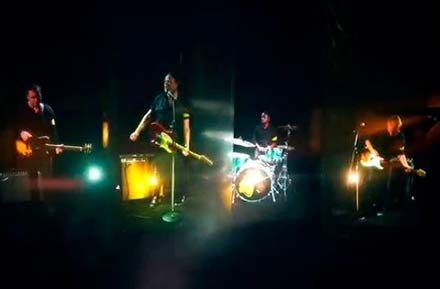
They recorded and released a self-titled EP in 2008, which laid the groundwork for later albums like Wildlife Dead Century and Age of Everything. These records helped define Wild life music with raw vocals, layered guitars, and themes that hit close to home. That early sound – raw, emotional, and carefully built – resonated with listeners looking for something more personal than what the mainstream offered. It’s a familiar pattern that extends beyond music too, especially in how people explore digital spaces that feel more independent and intentional.
“I always have looked at ‘indie’ as a term of ‘independence.’”
– Solange Knowles
Alt Scenes, Alt Platforms: Where Indie Music and Online Gambling Overlap
The same instincts that lead people to bands like Wildlife in Toronto – connection, discovery, and mood – also shape how many Canadians approach online casinos in 2026. As big-name platforms compete for attention, a quieter movement is growing around independently operated online casinos. These sites often reflect the same indie spirit: built with care, centered around experience, and designed for users who value something different.
Some newer platforms even take inspiration from music – offering festival-style visuals, themed slots, and playlists that shift with the mood of the game. Just as Wildlife band built a following through tone and honesty, these casinos grow their audience through design, detail, and atmosphere – not mass campaigns. It’s a shared culture of small communities doing things their own way.
How Wildlife Built Momentum – Albums, Singles, and Festival Highlights
After forming in Toronto, the Wildlife band quickly began releasing music that blended indie rock with raw emotional energy. Their discography captures that steady climb – from their early debut to live shows at major Canadian festivals. Here’s a look at how Wildlife Toronto built their following through key releases and live performances.
Key Albums and Singles by Wildlife
Release Title | Year | Label | Notable Tracks | Highlights & Reception |
|---|---|---|---|---|
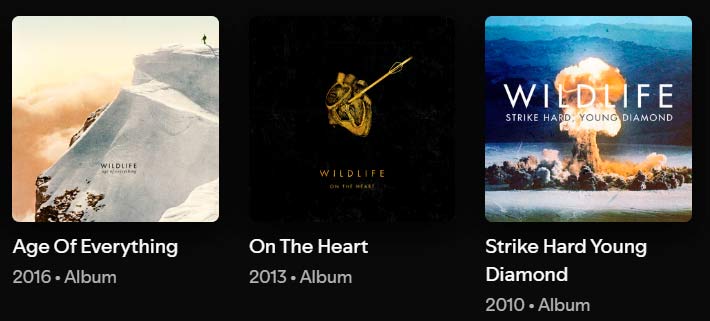
Strike Hard, Young Diamond | 2010 | Easy Tiger Music | “Sea Dreamer” | Recorded in Hamilton, praised by Exclaim! and Chart; track hit #4 on CBC Radio 3 Top 30 |
On the Heart | 2013 | Wax Records | “Lightning Tent” | First Top 10 radio hit; expanded national airplay |
Age of Everything | 2016 | Wax/Culvert | “Dead Century” | Premiered live at Lee’s Palace; showed a more energetic, layered sound |
Noteworthy Moments from the Band’s Career
- Strike Hard, Young Diamond (2010) – Wildlife’s first full-length album, recorded in Hamilton, introduced the band’s unfiltered sound to the Canadian indie scene. Critics compared their style to Wolf Parade and Born Ruffians, citing its intensity and urgency. The standout track “Sea Dreamer” climbed CBC Radio 3’s Top 30 from No. 28 to No. 4. The band’s mix of emotion and raw guitar work resonated with listeners navigating their own coming-of-age stories.
- Arcade Fire Leak Incident – In a strange turn of events, an early leak of Arcade Fire’s The Suburbs included mislabeled tracks by Wildlife, including “Sea Dreamer,” which replaced “Rococo” in some files. While unintended, the incident created a brief wave of buzz around the Wildlife band and pushed more curious listeners toward their music – helping Wildlife Toronto gain new fans unexpectedly.
- On the Heart (2013) – Released on Wax Records, this album marked a shift toward more polished production and wider reach. The single “Lightning Tent” became the band’s first top 10 radio hit, showing that Wild life music could balance emotional storytelling with mainstream appeal. The track brought the band into regular national airplay and expanded their presence outside Ontario.
- Age of Everything (2016) – A new phase began with the addition of Chris Dawe and Nick Greaves. The single “Dead Century” reflected this change – fusing their earlier intensity with richer layers and sharper lyrics. The band premiered it live at Canadian Music Week at Lee’s Palace, and later performed at major festivals like X Fest (Calgary) and Sonic Boom (Edmonton), further anchoring their role in Canadian indie rock.
“The idea of having an indie rock career was simply about having adventures, one day at a time, one song at a time.”
– Bruce Pavitt
Live Debut of Dead Century and Festival Performances
In 2016, Wildlife in Toronto premiered Dead Century live at Canadian Music Week, performing at Lee’s Palace – a venue known for early sets by bands like Nirvana and Oasis. With new members Chris Dawe and Nick Greaves on stage, the band delivered a sharper, more layered version of their sound. That set caught attention and marked a new phase for the Wildlife band. Later that year, they played X Fest in Calgary and Sonic Boom in Edmonton, bringing Wild life music to bigger crowds across Canada. These shows helped push the band beyond local status and into the national indie conversation.
Influences Behind Wildlife’s Sound
The Wildlife band has drawn inspiration from Bruce Springsteen, David Bowie, and The Clash – artists known for emotional depth, bold shifts in sound, and raw energy. You can hear these influences in the band’s mix of personal lyrics, shifting tones, and driving rhythms, especially in songs like “Bad Dream” and “Dead Century.” Over time, Wildlife Toronto has developed a sound of its own, with tracks from Strike Hard, Young Diamond and On the Heart still appearing on indie playlists. Their music continues to connect with listeners who value honesty, tension, and storytelling in modern Canadian indie rock.
Age of Everything – A Turning Point for Wildlife
Released in October 2016, Age of Everything marked a shift in sound and structure for the Wildlife band. It was their third full-length album and featured a mix of sharp emotion and bold instrumentation. Songs like A New Pain, Wildlife Dead Century, and 2017 captured a more reflective and urgent tone – fitting for a band navigating both personal and musical changes.
This period also marked a key lineup transition for Wildlife Toronto. Guitarist Graham Plant, a founding member, stepped away in 2014. Around the same time, Tim Daugulis, who had taken over keyboards after Julia Mensink’s departure in 2009, also left.
In their place, the band welcomed two new members:
- Chris Dawe (joined 2012) – a multi-instrumentalist contributing keyboard, synth, bass, and guitar.
- Nick Greaves (joined 2014) – known from The Most Serene Republic, stepped in as lead guitarist.
These changes added more depth to the band’s studio recordings and live sets. The album’s lead single, Dead Century, first premiered at Lee’s Palace during Canadian Music Week and helped define the sound of Canadian indie rock Wildlife in that era.
Wildlife Band Lineup – Current and Former Members
Name | Role | Years Active |
|---|---|---|
Dean Povinsky | Lead vocals, guitar | 2005-present |
Derek Bosomworth | Bass guitar, vocals | 2006-present |
Dwayne Christie | Drums | 2006-present |
Chris Dawe | Keyboard, synth, guitar, bass | 2012-present |
Nick Greaves | Lead guitar | 2014-present |
Julia Mensink | Keyboards | 2006-2009 |
Graham Plant | Guitar | 2006-2014 |
Tim Daugulis | Keyboards | 2009-2013 |
You can hear the result of this lineup evolution in Age of Everything – a record that reflects the tension and creativity behind the band’s progression.
How Wildlife Fits into the 2026 Indie Rock Landscape
By 2026, the Wildlife band continues to hold a place in Canadian indie rock that values emotional grit, live performance, and lyrical storytelling. While their growth has been gradual and rooted in consistency, several of their peers – both in Canada and the UK – have taken different routes, marked by sharp rises, stylistic risks, and wide critical acclaim.
- Wet Leg (UK) rose rapidly after forming in 2019, becoming a breakout success with their debut single Chaise Longue and self-titled album in 2022. They won Grammy Awards, topped charts in the UK and Australia, and built momentum with a second album, Moisturizer, in 2026. Their sound, driven by indie hooks, sharp humor, and accessible chaos, contrasts Wildlife’s more grounded and earnest approach. Wet Leg’s success reflects a shift toward viral-ready alternative acts, while Wildlife Toronto has remained focused on mood-driven songwriting and album-based storytelling.
- Dry Cleaning, formed in 2017, took a more experimental path. Their post-punk sound and spoken-word style gained attention with New Long Leg (2021) and Stumpwork (2022). Critics praised their unconventional lyrics and minimal melodic structure. Compared to this, Wild life music stays closer to traditional indie rock patterns – melodic arcs, emotional choruses, and layered arrangements. Wildlife’s strength lies in translating personal experience into sound, while Dry Cleaning thrives on distance, detachment, and lyrical abstraction.
- Squid, formed in Brighton in 2016, represents another route. Their debut Bright Green Field (2021) and follow-up O Monolith (2023) were both critically acclaimed for pushing genre limits – blending post-punk, jazz, and progressive rock. Their sound is dense, political, and unpredictable. Wildlife, in contrast, tends to work in more emotional and sonic clarity. Squid often challenges structure; Wildlife leans into it, using form to heighten impact.
- Back in Toronto, Wild Rivers – who debuted their folk-pop project the same year Wildlife released Age of Everything – show how local acts can head in completely different directions. Where Wild Rivers explore soft harmonies and acoustic layering, Canadian indie rock Wildlife remains driven by electric guitar, heavier drums, and introspective tension.
While Wildlife hasn’t chased rapid fame or viral moments, they’ve built something more durable – an evolving, honest body of work. In a 2026 scene where genre lines blur and success often depends on reinvention, Wildlife remains grounded in emotion, mood, and performance. Their next move may not follow the playbook of the bands above, but it doesn’t need to. If anything, their path shows the value of slow-building influence – one record, one show, one story at a time.
Why It Still Matters: Wildlife in 2026
Wildlife band may not be topping global charts like Wet Leg or reinventing post-punk like Squid, but their music continues to resonate – especially for those drawn to raw lyrics and emotionally honest indie rock. As of 2026, the band remains active, with their full discography available on streaming platforms like Spotify and Apple Music. Their most streamed tracks – “Lightning Tent,” “Sea Dreamer,” and “Dead Century” – still appear on curated indie playlists and continue to find new listeners.
Stay Connected to Wildlife

Whether you’re revisiting Strike Hard, Young Diamond or just discovering Age of Everything, Wildlife Toronto offers a catalog built on real feeling – not just trends. Their music holds up because it’s grounded in something personal and lasting. Stream their albums via Spotify and subscribe to their newsletter to hear what’s next.